Skip to Content

The Federal Reserve - FRBservices.org
  • Application Sign In
    • Discount Window Direct
    • FedLine Developer
    • FedLine Web
    • Reporting Central
    • Reserves Central
    • Structure Central
    • Survey Central
    • Term Deposit Facility
  • Service Status
  • Contact
  • Financial Services
    • Accounting
      • Accounting Information Services (AIS) – Premium Services
      • Account Management Information
      • Daily Statement of Account
      • Daylight Overdraft Reports
      • Statement of Service Charges

      • Accounting Services 2026 Fee Schedulle
      • Account Services Business Continuity Guide
      • Accounting Services Forms
      • Accounting Services Resources
      • Accounting Services Setup
    • Check Services
      • Check Adjustments Services
      • Duplicate Check Notification
      • Electronic Check Processing
      • FedImage and Electronic Check Services
      • FedPayments Reporter Service for Check Services
      • Foreign and Canadian Check Service
      • Image-Enabled Savings Bond Processing
      • Paper Check Clearing Services

      • Check Services 2026 Fee Schedule
      • Check Services Forms
      • Check Services Resources
      • Check Services Setup
      • Check Services Testing Opportunities
    • FedACH Services
      • Exception Resolution Service
      • FedACH Information File Service
      • FedACH Origination and Receipt
      • FedACH Receipt Discount Program
      • FedACH Risk Management Services
      • FedACH SameDay Service
      • FedGlobal ACH Payments
      • FedPayments Insights Service
      • FedPayments Reporter Service for FedACH Services

      • FedACH Services 2026 Fee Schedule
      • FedACH Services Business Continuity Guide
      • FedACH Services Forms
      • FedACH Services Resources
      • FedACH Services Setup
      • FedACH Services Testing Opportunities
    • FedCash Services
      • Cash Visibility
      • Coin
      • Coin Terminal Services
      • Currency
      • FedCash Services via the FedLine Web Solution

      • FedCash Services 2026 Fee Schedule
      • FedCash Services Business Continuity Guide
      • FedCash Services Forms
      • FedCash Services Resources
      • FedCash Services Setup
    • FedNow Service
      • About the FedNow Service
      • Blog Articles (Off-site)
      • FedNow Explorer (Off-site)
      • FedNow Service Participants and Service Providers
      • Industry Stories
      • Instant Payments Education (Off-site)
      • Innovator Exchange
      • Participant Collaboration

      • FedNow Service 2026 Fee Schedule
      • FedNow Service Forms
      • FedNow Service Resources
    • Fedwire Funds Service
      • FedTransaction Analyzer

      • Fedwire Funds Service 2026 Fee Schedules
      • Fedwire Funds Service Business Continuity Guide
      • Fedwire Funds Service Forms
      • Fedwire Funds Service Resources
      • Fedwire Funds Service Setup
      • Fedwire Services Testing Opportunities
    • Fedwire Securities Service
      • Fedwire Securities Joint Custody Service

      • Fedwire Securities Resources
      • Fedwire Securities Service 2026 Fee Schedules
      • Fedwire Securities Service Business Continuity Guide
      • Fedwire Securities Service Forms
      • Fedwire Securities Service Setup
      • Fedwire Services Testing Opportunities
    • Multiservice Solutions
      • Payee Name Verification

      • Multiservice Solutions 2026 Fee Schedules
    • National Settlement Service
      • National Settlement Service 2026 Fee Schedule
      • National Settlement Service Business Continuity Guide
      • National Settlement Service Forms
      • National Settlement Service Resources
      • National Settlement Service Setup
  • Central Bank
    • Lending Central (Discount Window)
      • Discount Window Direct (DWD) Early Adopter Program Expression of Interest Form
      • Discount Window Direct (DWD) Feature Guide

      • Central Bank Forms
      • Central Bank Resources
      • Discount Window Direct (DWD) Application Setup
    • Reporting Central
      • Reporting Central and Structure Central User Guides

      • Central Bank Forms
      • Reporting Central and Structure Central Applications Setup
      • Reporting Central National Business Continuity Information
      • Reporting Central Resources
    • Reserves Central
      • Excess Balance Account
      • Schedule for Maintenance Periods and Interest Payments on Reserve Balances
      • Term Deposit Facility

      • Central Bank Forms
      • Central Bank Resources
      • Reserves Administration Business Continuity Guide
      • Reserves Central Service Setup
  • Treasury Services
    • Collateral Services
    • Savings Bonds for Financial Institutions
    • Savings Bonds News You Can Use
    • Treasury ACH Reclamation
    • Treasury Auctions
    • Treasury Check Reclamation

    • Treasury Services Business Continuity Guide
    • Treasury Service Forms
    • Treasury Services Resources
    • Treasury Services Setup
  • FedLine Solutions
    • FedLine Advantage
    • FedLine Command
    • FedLine Developer
    • FedLine Direct
    • FedLine Web
    • FedMail

    • Application and Connectivity Testing
    • FedLine Solutions 2026 Fee Schedules
    • FedLine Solutions Business Continuity Guide
    • FedLine Solutions Forms
    • FedLine Solutions Resources
    • FedLine Solutions Setup
  • Forms
    • Accounting Services Forms
    • Central Bank Forms
    • Check Services Forms
    • FedACH Services Forms
    • FedCash Services Forms
    • FedLine Solutions Forms
    • FedNow Service Forms
    • Fedwire Funds Service Forms
    • Fedwire Securities Service Forms
    • National Settlement Service Forms
    • Treasury Services Forms

    • Forms Frequently Asked Questions
  • Resources
    • Central Bank Resources
      • Central Bank Frequently Asked Questions
      • Reporting Central Resources
      • Structure Central Resources
      • Survey Central Resources
    • E-Payments Routing Directory
    • FedLine Solutions Resources
      • End User Authorization Contact Support Page for FedLine EUACs
      • FedLine Command Environment and Configuration Change Matrix
      • FedLine Direct File Environment and Configuration Change Matrix
      • FedLine Direct Message Environment and Configuration Change Matrix
      • FedLine Solutions Frequently Asked Questions
    • Financial Services Resources
      • Accounting Services Resources
      • Check Services Resources
      • FedACH Services Resources
      • FedCash Services Resources
      • FedGlobal ACH Payments Foreign Exchange Rates
      • FedNow Service Resources
      • Fedwire Funds Service Resources
      • Fedwire Securities Resources
      • National Settlement Service Resources
    • Industry Links
    • Resource Centers
      • Business Continuity Resource Center
      • FedLine Solutions Security and Resiliency Assurance Program (“Assurance Program”) Resource Center
      • International Payments Resource Center
      • Same Day ACH Resource Center
      • Welcome to the Business Banking Toolbox!
      • Welcome to the Risk Management Toolbox!
    • Rules and Regulations
      • Operating Circulars
      • Regulations
    • Service and Access Setup
      • Current Financial Services Customer – Add or Modify Services or Access
      • Financial Institution Merger – Modify Services or Access
      • New Financial Services Customer – Setup Services or Access
      • Payment Processors and Third-Party Service Providers – Set Up Services and Access
    • Service Fees
    • Treasury Services Resources
      • Collateral Services
      • Savings Bonds for Financial Institutions
      • Treasury Auctions
      • Treasury Services Frequently Asked Questions
  • Education
    • Federal Reserve Bank Webinars
    • Industry Events
    • Products & Services Education
  • News
    • Communications
    • Fed360
    • Press Releases
    • Research
    • Stay Engaged: Email Newsletters
  • About
    • About Federal Reserve Bank Services
    • Advisory Groups
    • Federal Reserve Bank Offices
    • Financial Services Leadership Team
    • Holiday Schedules
Home/Resources/Financial Services Resources/FedCash® Services Resources/FedCash® Services Depositing and Ordering/Deposit Visual Reference Guide

Fed­Cash Ser­vices Re­sources

  • Currency and Coin Exception Processing
    • Contaminated Currency and Coin
    • Handling Counterfeit Currency
    • Mutilated Currency
  • Currency Quality Program
  • Currency Recirculation Policy
    • Custodial Inventory Program
    • FedCash Services Cross-shipping Reports
  • FedCash Frequently Asked Questions
    • Cash Visibility Frequently Asked Questions
    • Currency and Coin Frequently Asked Questions
    • Currency Quality Program Frequently Asked Questions
    • Daily Carrier Run Frequently Asked Questions
    • Electronic Difference Advices Frequently Asked Questions
    • Penny Order and Deposit Information
    • Recirculation Policy Frequently Asked Questions
    • Uniform Cash Access Policy (UCAP) Frequently Asked Questions
  • FedCash Services Cash Highlights and Industry Outreach
  • FedCash Services Depositing and Ordering
    • Deposit Visual Reference Guide
    • FedCash Services Coin Depositing and Ordering
    • FedCash Services Currency Depositing and Ordering
    • FedCash Services Deadlines for Orders and Deposit Notifications
  • Foreign Bank International Cash Services Program
    • Introducing the New Foreign Bank International Cash Services Program
    • Participant Announcements
  • Information and Resources about U.S. Currency
  • New Coin Release Information
  • Operating Circular 2 References the Following Information

Deposit Visual Reference Guide

Introduction

The Deposit Visual Reference Guide (PDF) (DVRG) is a supplement to the Cash Services Manual of Procedures (CSMOP) and is not all inclusive of the requirements. If a deposit does not comply with these guidelines, it may be rejected by the servicing Federal Reserve Bank and returned to the depository institution at their expense, or differences associated with these errors may be charged to the institution.

The following web version was revised November 1, 2023 to incorporate guidance for institutions that utilize FedCash E-Manifest Service. For more information on E-Manifest, please visit the FedCash E-Manifest Service webpage.

Preparing Currency Deposits

What to do

Before depositing currency, currency must be prepared according to denomination. For $1 through $20 denominations, your deposit(s) must contain full bundles. If depositing $50 or $100 denominations, they must be in full straps and/or full bundles.

All Denominations:

  • All notes in a deposit must be clearly more than 50 percent of a note to receive credit.
  • Notes must be piece counted and verified for authenticity before depositing.
  • Unfit currency, currency that is not suitable for further circulation due to its physical condition (torn, dirty, limp, worn or defaced), should be included in your regular deposit(s).
  • Notes should be straightened, and all corners and edges should be aligned.

Preparing Currency Straps

Overview

What to do
  • A strap is a package of 100 notes.
  • All straps must contain 100 notes of the same denomination and must have only one band around them.
  • Include only U.S. currency. Under no circumstances should coin or other valuables be included.
  • Notes within the strap may be packaged without regard to direction or facing.
  • All paper clips, staples, rubber bands and excess tape on the notes (causing notes to unnecessarily stick together) must be removed.

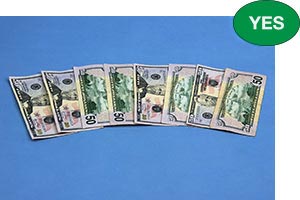
CORRECT—As shown in these examples, notes within a strap can be arranged without regard to facing or direction

CORRECT— As shown in these examples, notes within a strap can be arranged without regard to facing or direction.
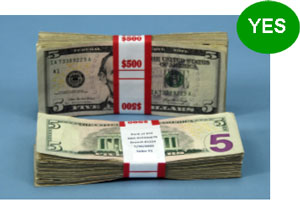
Yes - bundles of cash with a single band of proper color-coding and material
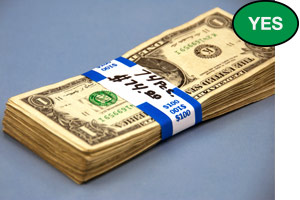
CORRECT—This strap is properly and neatly assembled and includes the teller’s identification and date of verification.
What NOT to do
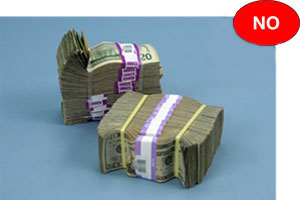
  • Straps that contain sub straps (rubber bands or paper clips subdividing notes within the strap) are not permitted.
  • Currency identified as mutilated or contaminated must NOT be included in deposits with fit or unfit currency (refer to CSMOP for instructions on sending mutilated currency to the Bureau of Engraving and Printing (BEP) and depositing contaminated currency with the Federal Reserve).
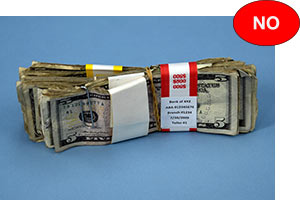
Incorrect - The strap contains sub-straps, rubber bands and paper clips
INCORRECT—This strap contains sub-straps, rubber bands, and paper clips.

Strap Bands

What to do
  • A band is a strip of paper material used to bind or hold together a strap.
  • Each strap must be bound by only one band.
  • Bands must be applied to the middle of each strap.
  • Bands should be secured around the strap without the band adhesive or securing tape unnecessarily sticking to the notes within.
  • Bands must be white paper and color-coded (along the edges) to conform to existing standards of the American Bankers Association (ABA).
  • Band material must be between 1.00 to 1.57 inches wide with an approximate weight of 100 g/sqm, made of paper and not synthetic materials.
  • Bands should indicate the dollar amount of currency in the strap, the date of verification and the initials or names of the persons who verified the strap.
  • The length of the band must be such that the band wraps the strap once with minimal overlap, so no loose flaps (such as a tail) are remaining beyond the adhesive.
  • For correct placement of bank stamps refer to section “Stamps”.
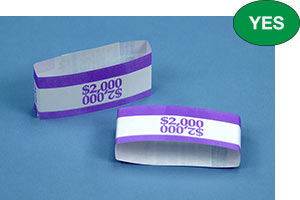
Yes - bundles of cash with a single band of proper color-coding and material
CORRECT—The strap has a single band of proper color-coding and material, and includes the teller’s identification and date of verification. In addition, the band has no excess flap.
Correct - Band showing no excess flap
CORRECT—This band has no excess flap
What NOT to do
  • Do not use bands with loose flaps.
  • Do not use brown paper bands, that is, those bands made of recycled stock paper, as they do not image well. Bands should be made of white paper to ensure information is clearly captured when imaged.
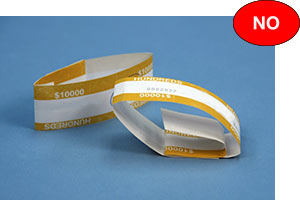
Incorrect - Bands showing loose flaps
INCORRECT—Do not use bands with loose flaps.

Band Stamps

What to do
  • Each band must be stamped with the following information:
    • Institution’s name;
    • ABA routing number; and
    • Four-digit endpoint number (branch number) of the depositing office (a band without an office identification number is deemed to be from the institution’s head office).
  • Use black or dark ink (not red) on the stamp to help ensure good quality images.
  • Use large and easy-to-read font on your stamp.
  • Refresh ink pads frequently.

All Denominations
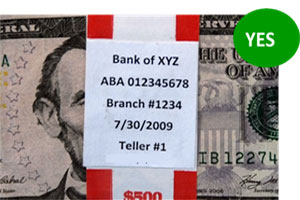
CORRECT—The stamp is in black ink, shows the required deposit information, and includes the teller’s identification and date of verification.
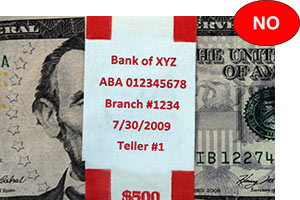
An incorrect stamp using red ink
INCORRECT—The stamp shows the use of red ink.
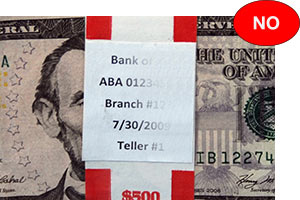
An incorrect stamp that is blurred
INCORRECT—The stamp shows a blurred stamp that is unreadable.

What to do

All Denominations
  • The bank stamp on the band may be placed on either side of the strap, without regard to the portrait; however, straps within the bundle must be arranged such that all bank stamps face the same direction. (See picture in “Preparing Bundles” section)
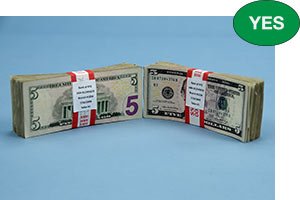
Correct example where bank stamp is placed on either side of the strap without regard to facing
CORRECT—The bank stamp is placed on either side of the strap without regard to facing.

Preparing Bundles

What to do

All Notes
  • A bundle consists of 1,000 notes of the same denomination in ten equal straps of 100 notes each.
  • All strap edges must be vertically aligned into a single organized stack and oriented in the same direction.
  • Straps must be bound together.
  • Securing the straps together to make a bundle may be achieved through the use of rubber bands or other tension material. The bundle tension material:
    • Must be secured enough to remain intact through transportation and handling: (1) not too tight as to overstress the notes causing them to bend/crease within the bundle; or (2) not too loose where the notes or straps move around or the tension material breaks or falls off of the bundle;
    • Must be secured across the short side at both ends of the bundle (and not on subgroupings of straps within the bundle); and
    • Must allow for clear view of the currency strap band.

All Denominations

  • Straps within the bundle must be arranged such that all bank stamps face the same direction.
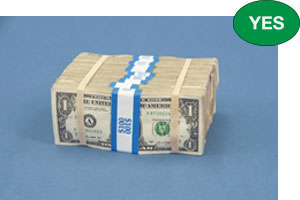
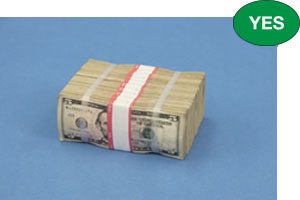
Example of properly stacked bundle using rubber bands
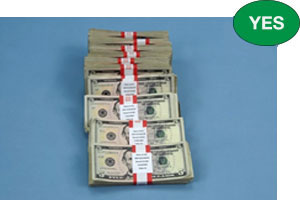
CORRECT—The bundle is properly stacked and tension material is on the right ends of the bundle allowing clear visibility of the band. The tension material is not too tight or too loose so the notes remain firm without bending or creasing.
Example of properly stacked bundle using plastic tension material
CORRECT—The straps within the bundle are properly stacked and tension material is on the right ends of the bundle allowing clear visibility of the band. The tension material is not too tight or too loose so the notes remain firm without bending or creasing. The tension material has no protruding edges.
Correct example where all stamps in a bundle face the same direction
CORRECT—All the stamps in the bundle face in the same direction.

What NOT to do

All Notes
  • The bundle must not contain mixed denominations.
  • The bundle tension material must not:
    • be so tight as to cause damage to the notes;
    • be placed around the long end of the bundle (i.e., lengthwise); and
    • have any residual material (such as a tail) that could risk compromising the shipping bag or the bundles/straps around it.

Currency deposits that do not meet the stated criteria upon inspection at your servicing Federal Reserve Bank may be refused.
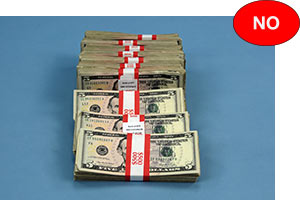
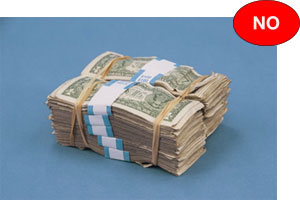
Incorrect example where stamps in bundle are not facing the same direction
INCORRECT—The stamps in the bundle face in multiple directions.
Incorrect bundle where straps do not have proper orientation
INCORRECT—The straps within the bundle are not placed together in the proper stack orientation.
Incorrect example showing rubber band subgrouping within stacks
INCORRECT—The bundle contains rubber band subgrouping of notes within the straps.
An incorrect example where tension material is too loose
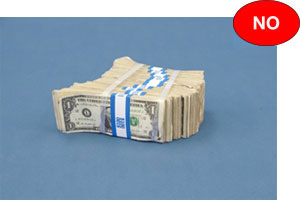
INCORRECT—The tension material is too loose to where the notes can move around and there is a risk of the tension material breaking.
An incorrect example of improper placement of tension material on stack
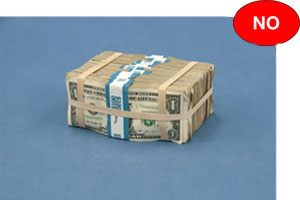
INCORRECT—There is tension material placed on the incorrect end (on the long end) of the straps.
An incorrect example where tension material is too long
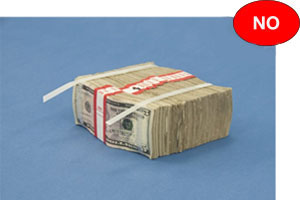
INCORRECT—The tension material tail is too long and could compromise the shipping bag or other bundles/straps around it.
Incorrect example where tension material on stack is too tight
INCORRECT—The tension material is too tight, causing the notes within the bundle to deform and bend/crease.

Currency Bags/Containers

What to do

  • Only clear plastic bags or clear plastic/metal containers may be used for deposits.
  • Plastic bags must be at least 5 mils thick or the equivalent in strength and durability.
  • The bags/containers of deposits must be securely sealed with a tamper-evident seal, so that any unauthorized access is easily detected, and the bags must be free of holes and tears.
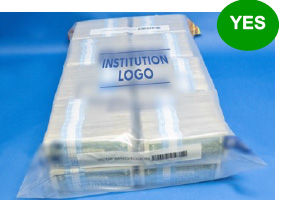
  • The bags/containers must bear the institution’s identification (logo and/or name).

To help ensure your deposit is properly identified and remains secured, the following practices are also recommended:

  • Each bag should indicate the institution’s ABA number (with four-digit endpoint number), institution’s name, and dollar amount of the contents on each bag, as well as the bag number (e.g. “Bag ___ of ___”).
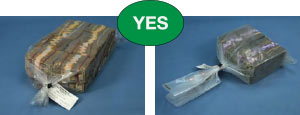
  • If using a large-capacity currency bag for a small deposit, please be sure to cinch or seal the bag in such a way to prevent tearing of the straps or breaking the bundles in transit.
  • Containers must be secured with tamper-evident seals that have unique seal numbers with the seal numbers provided to your servicing Federal Reserve Bank.
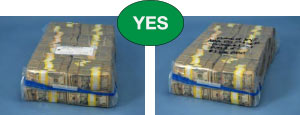
A correct example of properly labeled currency bag
CORRECT—The currency bag is properly labeled with a typed or handwritten institution’s identification and deposit information.
A correct example of a currency bag with tamper-proof seal
CORRECT—The currency bag is secure with a tamper-evident plastic seal, and the tag is attached to the seal. In addition, the currency bag is properly and tightly cinched based on the size of the deposit.
A correct example of a currency container with tamper-evident seal
CORRECT— As shown in the two images above, containers must be secured with tamper-evident seals that have unique seal numbers.

Your servicing Federal Reserve Bank requires you to include a deposit document with your deposit. Consult with your servicing Federal Reserve Bank for specific policies and procedures.

For institutions that are enrolled in the FedCash E-Manifest Service with their servicing Federal Reserve Bank:

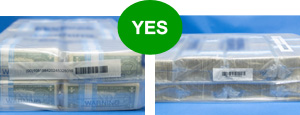
  • Bags must visibly bear a unique linear Serial Shipping Container Code (SSCC) standard barcode (barcode placement at each end of the bag for a total of 4 barcodes).
  • Containers must have a plastic tag (recommended white in color) with a unique linear SSCC barcode. This tag is not to serve as a security seal. It is only to provide the necessary SSCC barcode for the container and is in addition to the security seals.
  • The SSCC barcodes must include the printed numeric figures in a size that is easily legible.
  • If re-depositing Federal Reserve packaged inventory, contact your servicing Federal Reserve Bank.
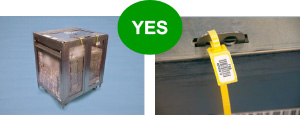
Visit the FedCash E-Manifest Service webpage for more information.
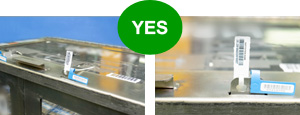
A correct example of containers with a white plastic tag with a unique SSCC barcode
CORRECT— Containers must have a plastic tag, recommended white in color, with a unique SSCC barcode.
A correct example of cash container bearing a unique SSCC barcode
A correct example of bags bearing a unique SSCC barcode
CORRECT— As shown in the three images above, bags must visibly bear a unique SSCC standard barcode with a recommended barcode placement at each end of the bag for a total of four barcodes. SSCC barcode is easily legible and unobstructed.

What NOT to do

  • A full bag must not contain more than 16 bundles of currency.
  • The bag tag should not be placed inside the bag.

For institutions that are enrolled in the FedCash E-Manifest Service with their servicing Federal Reserve Bank:

  • The SSCC tag must not be affixed in a manner where the barcode is not visible for scanning.
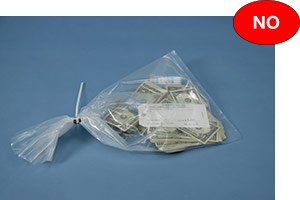
Incorrect example of currency bag with loose notes
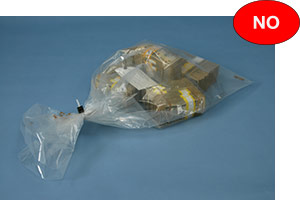
INCORRECT—The currency bag contains loose notes. It is not cinched properly, and the tag is placed inside the bag.
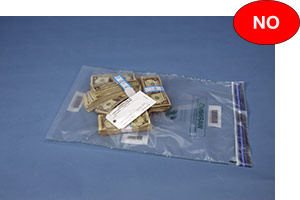
Incorrect example of a currency bag containing loose notes or a small deposit placed in a large bag with the tag inside the bag
INCORRECT—The currency bag contains loose notes/straps, or a small deposit is placed in a large bag with the tag inside the bag.
Incorrect example of small deposit in large bag
INCORRECT—The currency bag contains loose notes/straps, or a small deposit is placed in a large bag with the tag inside the bag.
Example of incorrect barcode on cash container
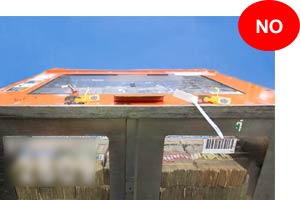
INCORRECT—The SSCC tag is affixed to the container upside down so that the barcode is not visible for scanning.
Contaminated Currency

What to do

Contaminated currency is currency that has been damaged by or exposed to contaminants, poses a health hazard or safety risk, and cannot be processed under normal operating procedures.

Institutions should obtain as much information as possible from their customer regarding the type and extent of the contamination before contacting the servicing Federal Reserve Bank to deposit contaminated currency.

Note: Currency which has been damaged to the extent that its value is questionable is not handled by the Federal Reserve Bank. These notes, which are commonly referred to as mutilated currency, should be sent to the Bureau of Engraving and Printing, Mutilated Currency Division, Office of Financial Management for validation and redemption.

Procedures for depositing contaminated currency:

  • Separate contaminated currency from normal deposits.
  • If contaminated notes are old U.S. currencies or high denomination notes ($500 and above), they must be packaged separately.1
  • Contaminated currency must be prepared by denomination, in straps of 100 notes and in bundles of 10 straps.
  • Rubber bands must be used to secure multiple full straps and, contrary to normal deposit procedures, should be securely placed around the middle of the bundle.
  1. All large size currencies; National Bank notes, small size; Federal Reserve Bank notes, small size; and Gold certificates, small size, series 1928 only. ↩︎
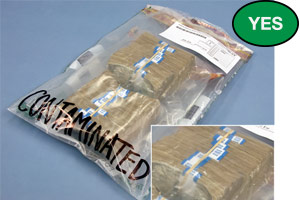
Correct example of contaminated currency in separate double bag
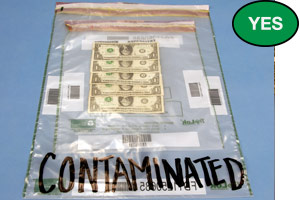
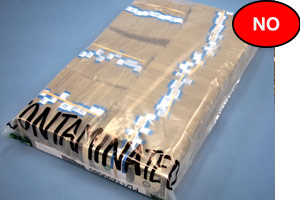
CORRECT—The contaminated deposit is separated from a normal deposit, properly double bagged and is marked with the word “contaminated” on the outer bag. The straps are secured with rubber bands placed around the middle of the bundles.

What is considered contaminated currency?

Currency may become contaminated due to:

  • Prolonged exposure to water or other liquids that results in the existence of mold. (Note: Wet currency that does not show signs of mold is not considered contaminated and should be dried and deposited under the normal process.)
  • Exposure to blood, urine, feces, or any other bodily fluids, including removal from any body cavity, corpse, or animal.
  • Exposure to sewage.
  • Exposure to any chemical, liquid, or foreign substance that may pose a health hazard or safety risk.
  • Exposure to tear gas used in most dye packs. (Note: The dye used in dye packs is not considered a contaminant. Notes stained from the dye alone should be deposited normally.)
What to do
  • Partial straps of 50 notes or less of a single denomination must be fanned in a way that allows for more than 50 percent of each note to be clearly visible through all of the packaging material. Staples should be used to secure the fan before the notes are placed into the bag.
  • Partial straps containing between 51 and 99 notes of a single denomination must be wrapped with a paper band. The band must be marked with the piece count and dollar amount.
  • Contaminated currency must be double- bagged, and the bags must be large enough to permit movement of the currency inside the bags for initial visual inspection.
    • The inner bag must be a strong, tamper-evident, clear plastic currency bag purchased by your institution for depositing with the Federal Reserve. Do not use store-bought resealable style bags for the inner bag.
    • The outer bag must also be a strong, tamper-evident, clear plastic currency bag used by your institution for depositing with the Federal Reserve.
  • The word “CONTAMINATED” must be written in permanent marker and large letters on the outside of the outer bag. Any exterior printing on the bags must not inhibit the view of the bagged contents.
  • Provide advance written notification to your servicing Federal Reserve Bank by completing the FedCash Services Contaminated Currency form and sending it via email or fax to the Federal Reserve Bank prior to sending contaminated currency to the servicing Federal Reserve Bank. Be sure to provide as much information as possible regarding the type and extent of the contamination.
  • Provide a separate Federal Reserve Bank deposit document or electronic deposit notification form (such as the What to Expect or WTE file for E-Manifest Service) that includes the denominational breakdown and total of the contaminated currency. The deposit document should accompany the deposit.

For institutions enrolled in the FedCash E-Manifest Service with their servicing Federal Reserve Bank:

  • In addition to the above requirements, contaminated currency must be double- bagged with the exterior bag being the SSCC barcoded bag used for scanning.
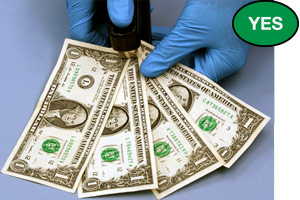
Correct example of contaminated notes stapled together
CORRECT—Partial straps of 50 notes or less of a single denomination are stapled in a fan shape in such a way that each note can be clearly denominated and piece counted.
Incorrect example of contaminated notes where 50% of the money is not clearly visible
INCORRECT—The notes are not fanned in a way that allows for more than 50 percent of each note to be clearly visible.
Correct example of partial contaminated strap in bag with notes visible
CORRECT—Partial straps of 50 notes or less of a single denomination are stapled in a linear fashion where each note can be clearly denominated and piece counted.
Correct example of partial strap labeled with piece count and total dollar amount
CORRECT—Partial straps of 51 – 99 notes of a single denomination are wrapped with a paper band and marked with the piece count and total dollar amount.
What NOT to do
  • Do not include any extraneous items inside or between the inner and outer bags. Extraneous items include paper clips, deposit documents, bag tags, or dye pack mechanisms. The presence of extraneous items will result in your deposit being returned.
  • Double-bagging must not inhibit the view of the bagged contents.
  • If proper advance notification of a contaminated currency deposit does not occur, or if proper packaging requirements are not met, the Federal Reserve Banks reserve the right to return the deposit to the institution. For more information, contact your local Cash office.
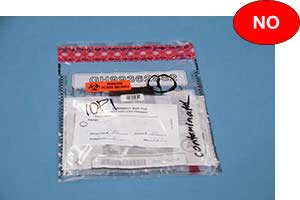
Incorrect example where contaminated currency is not visible inside bag
INCORRECT—The contaminated deposit is not double-bagged in a manner that the contents of the bag are visible.
Contaminated currency inside bag that is too small to allow for proper visual inspection
INCORRECT—The bundles are not double-bagged in bags large enough to permit movement of the currency inside for initial visual inspection.
Incorrect examples of bagged contaminated currency
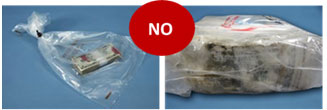
INCORRECT—In the image on the left, the contaminated deposit is not double-bagged or marked with the word “contaminated.” In the image on the right, the contaminated deposit is not double-bagged in a manner that the contents of the bag are visible.

For institutions enrolled in the FedCash E-Manifest Service with their servicing Federal Reserve Bank:

  • Do not write over or block the SSCC barcodes on the exterior bag.
  • Unneeded barcodes on interior bags should be crossed out to avoid mis-scanning.

Review the Contaminated Currency and Coin Policy for complete details and a video on handling contaminated currency and coin.

Example of contaminated currency in bag where bar code is not visible
INCORRECT—The SSCC barcode on the exterior of the bag is not visible as it has been covered by writing.

Mutilated Currency

The Federal Reserve DOES NOT accept deposits of mutilated currency.

What to do

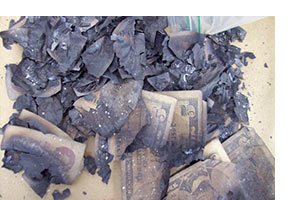
  • Mutilated currency is currency that has been damaged to the extent that one-half or less of the note remains, or its condition is such that its value is questionable and special examination by trained experts at the BEP (Off-site) is required before any exchange is made.
  • Burnt currency that is clearly less than one-half a complete note and cannot be handled without compromising its integrity is considered mutilated currency.
  • Mutilated currency must be sent directly to the BEP’s Mutilated Currency Division with a letter stating the estimated value of the currency and an explanation of how the currency became mutilated.

What NOT to do

  • Unfit contaminated, but not mutilated, currency should not be sent to the BEP’s Mutilated Currency Division. The Federal Reserve processes this currency; however, currency that is both contaminated and mutilated should be sent to the BEP’s Mutilated Currency Division.
  • Currency that is clearly more than one-half, but less than a complete note, heavily soiled, limp, worn or torn, is not considered mutilated, and should be included in a normal deposit.
  • Do not send suspect counterfeit currency to the BEP’s Mutilated Currency Division as a mutilated claim. For more information on counterfeit currency, visit Handling Counterfeit Currency.

You may call the BEP’s toll-free number, P: (866) 575-2361, or visit the BEP website (Off-site) to obtain more information on shipping instructions for mutilated currency, and to see photographic examples of mutilated currency.
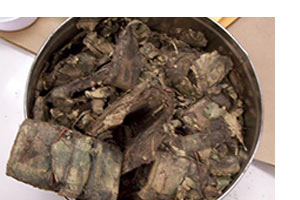
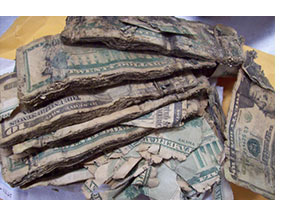
Buried currency
EXAMPLE — This example shows buried currency.
Liquid damaged currency
EXAMPLE —This example shows liquid damaged currency.
Burned currency
EXAMPLE — This example shows burnt currency.

Coin Deposits

What to do

  • Package loose coin by denomination in plastic or canvas bags.
  • If using canvas bags with a tamper- evident plastic/string tie and lead seals, attach the correct color-coded tags, showing the denomination, dollar amount, institution identification and ABA with four-digit endpoint number to the seal. Do not place the tag inside the bag.
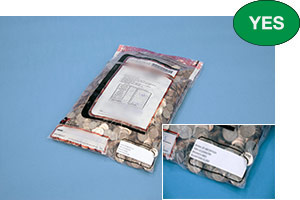
  • If using plastic bags, each bag must be tamper-evident and have a label on the opposite side of the handle showing denomination, dollar amount, institution identification and ABA with four-digit endpoint number.
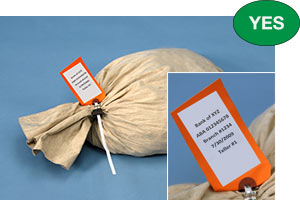
Correctly secured coin bag with a tamper-evident plastic seal and a correct color-coded tag.
CORRECT—The coin bag is correctly secured with a tamper-evident plastic seal and a correct color-coded tag, based on denomination, containing institution identification.
Correct tamper-evident plastic bag correctly labeled with instutition identification.
CORRECT—The tamper-evident plastic bag is correctly labeled with the institution identification based on the denomination, with the dollar amount.

What NOT to do

  • When preparing a coin deposit, make sure to piece count and verify the coin and not mix coin of different denominations in the same bag. Bags found to have mixed denominations may be rejected by the servicing Federal Reserve Bank and returned to the institution at their expense, or differences associated with these errors may be charged to the institution.
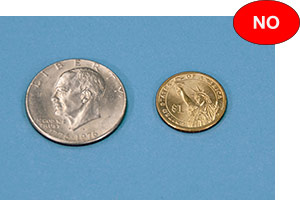
  • Susan B. Anthony, Native American and Presidential dollar coins may be bagged together, but they must be bagged separately from Eisenhower dollars.
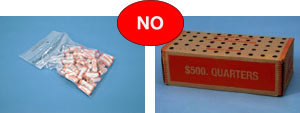
  • Deposits of boxed or wrapped coin are not accepted.

Your servicing Federal Reserve Bank may require you to include a deposit document with your deposit. Consult with your servicing Federal Reserve Bank for specific policies and procedures.

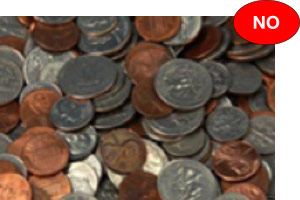
Incorrectly sealed canvas coin bag.
INCORRECT—The canvas bag is incorrectly sealed with a non-tamper evident seal, and the seal was applied loosely. The bag also doesn’t contain a tag.
Incorrect mixxing of different dominations in the same bag.
INCORRECT—Different denominations of coin cannot be mixed in the same bag.
Eisenhower dollars must be seperated from all other dollar coins
INCORRECT—For one dollar coins, Eisenhower dollars must be separated from all other dollar coins.
Incorrect depost of rolled or boxed coins.
INCORRECT—Rolled coin and boxed coin cannot be deposited.

Plastic Coin Bags

What to do
  • Coin deposits may be made in either standard canvas bags with tamper-evident seals or tamper- evident clear plastic bags.
  • Clear plastic bags must meet the following requirements:
    • Must possess a tamper-evident seal;
    • Reinforced handle able to withstand hang test with +100 lb. load or the equivalent in strength and durability;
    • Material must be 6.5-mil gauge or the equivalent in strength and durability;
    • Size must approximate that of a standard canvas bag;
    • Contents must be clearly visible through the packaging material; and
    • Each bag must have a label on the opposite side of the handle showing the denomination, dollar amount, institution’s name and ABA routing number (with four-digit endpoint number).
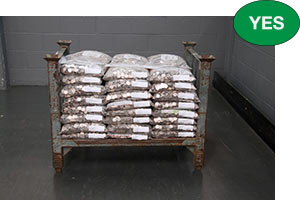
Correct stacking of plastic bags of coins on a pallet with the labels facing out.
CORRECT—The plastic bags are stacked on the pallet with all labels facing out.
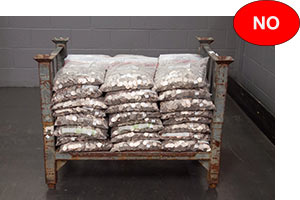
Coin bags stacked on pallet improperly, with labels facing inward
INCORRECT—The plastic bags are stacked on the pallet with all labels facing inward.

Canvas Coin Bags

What to do
  • Canvas bags must meet the following requirements:
    • Each canvas bag must have a color-coded tag, in accordance with the ABA standards based on denomination;
    • The tag must contain the denomination, dollar amount, institution’s name and ABA routing number with four-digit endpoint number; and
    • A tamper-evident seal with the institution’s identification must be used.
  • If depositing in pallets, bags should be neatly stacked.
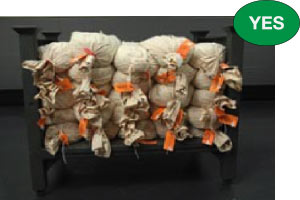
Correct coin bags stacked on pallet with labels facing out
CORRECT—The canvas bags are stacked on the pallet with all labels facing out.
What NOT to do
  • Bags should not be torn or damaged.
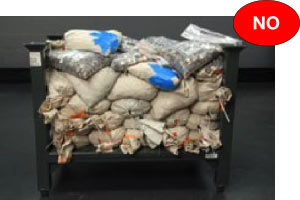
Incorrect canvas bags with lables facing inwards and some bags showing evidence of holes and tears.
INCORRECT—The canvas bags are stacked on the pallet with all labels facing inward and some bags show evidence of holes and tears.

Bent or Partial Coin

The Federal Reserve DOES NOT accept deposits of bent or partial coin.

  • Coin classified as bent or partial should be forwarded directly to the U.S. Mint (for the address, refer to the Cash Services Manual of Procedures (CSMOP).)
  • Bent or partial coin is not redeemable at face value; it is redeemable only at its bullion (metal) value as established by the Director of the U.S. Mint.
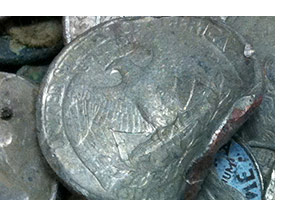
Bent or partial coin
EXAMPLE —This example shows bent or partial coin.
Bent or partial coin
EXAMPLE —This example shows bent or partial coin.

Contaminated Coin

The Federal Reserve does not accept deposits of Contaminated Coin. Contaminated Coin must be decontaminated per the guidelines established by the Center for Disease Control and Prevention (CDC) for decontamination of surfaces in the “Cleaning & Sanitizing” section. If you want to deposit the Coin after decontamination, contact the servicing Federal Reserve Bank for further instructions.

For complete instructions on Contaminated Coin, visit the Contaminated Coin and Currency page.

Top of Page

  • X
  • LinkedIn

FINANCIAL SERVICES

  • Accounting
  • Check Services
  • FedACH Services
  • FedCash Services
  • FedNow Service
  • Fedwire Funds Service
  • Fedwire Securities Service
  • Multiservice Solutions
  • National Settlement Service

CENTRAL BANK

  • Lending Central (Discount Window)
  • Reporting Central
  • Reserves Central

TREASURY SERVICES

  • Collateral Services
  • Savings Bonds for Financial Institutions
  • Savings Bonds News You Can Use
  • Treasury ACH Reclamation
  • Treasury Auctions
  • Treasury Check Reclamation

FEDLINE® SOLUTIONS

  • FedLine Advantage
  • FedLine Command
  • FedLine Developer
  • FedLine Direct
  • FedLine Web
  • FedMail

FORMS

  • Accounting Services Forms
  • Central Bank Forms
  • Check Services Forms
  • FedACH Services Forms
  • FedCash Services Forms
  • FedLine Solutions Forms
  • Fedwire Funds Service Forms
  • Fedwire Securities Service Forms
  • National Settlement Service Forms
  • Treasury Services Forms

RESOURCES

  • Central Bank Resources
  • E-Payments Routing Directory
  • FedLine Solutions Resources
  • Financial Services Resources
  • Industry Links
  • Resource Centers
  • Rules and Regulations
  • Service and Access Setup
  • Service Fees
  • Treasury Services Resources

EDUCATION

  • Federal Reserve Bank Webinars
  • Industry Events
  • Products & Services Education

NEWS

  • Communications
  • Fed360
  • Press Releases
  • Research
  • Stay Engaged: Email Newsletters

ABOUT

  • About Federal Reserve Bank Services
  • Advisory Groups
  • Federal Reserve Bank Offices
  • Financial Services Leadership Team
  • Holiday Schedules

CONTACT

SITEMAP


This site is a product of the Federal Reserve Banks.
Terms of Use | Supported Browsers | Privacy Policy
General Reserve Bank Data Privacy Notice | Reprinting Articles

Address comments and questions to the
FRBservices.org Web Master
© 2026 Federal Reserve Banks