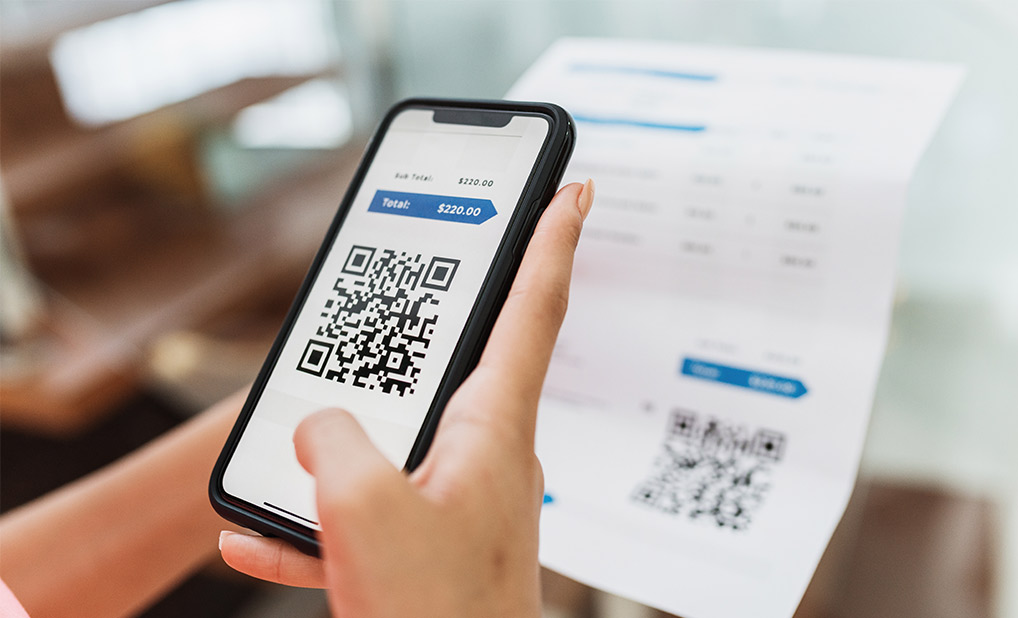

A new standard to support interoperable, secure QR code payments was recently published by the Accredited Standards Committee X9 Inc., the nonprofit organization accredited by the American National Standards Institute to develop financial industry standards for the United States.
According to X9 (Off-site), this new standard "defines the structure, content and security requirements for merchant-presented, dynamically generated payment QR codes for initiating push payments in the United States. It specifies the data elements, message structures and associated security requirements governing the QR code content, payment payload data model and payment notification needed to support interoperable, secure initiation and processing of QR-code-based payments across multiple payment networks and service providers."
Why it matters
In a conversation with Federal Reserve Financial Services last fall, Carlos Netto, CEO and co-founder of leading QR code provider Matera, shared that this new standard is significant because it will allow payment processors to create interoperable QR codes using existing connections to various payment rails like the FedNow® Service.
Payment QR codes are different from URL QR codes. While people typically access URL QR codes via their phone’s camera to view restaurant menus, web pages, etc., payment QR codes are accessed via an authenticated app — like a mobile banking app or digital wallet — which can provide greater security.
"Clear, consistent standards like X9.150 make it easier for everyone to trust the payment experience, whether you're a business accepting a payment or a customer making one," said Amy Burr, executive vice president and chief product and relationship officer at FRFS. "When the industry aligns on secure, interoperable approaches, it opens the door to better experiences for consumers and smoother operations for providers across the board."
As payment QR codes become more prominent, they have the potential to spur broader adoption of instant payments via the FedNow Service and offer efficiency and reduced pain points for financial institutions and their customers.
Learn more
Interested in reading more about this new standard? We pulled together a few resources:
- X9 press release: New X9 Standard for Secure, Interoperable QR Code Payments Will Accelerate U.S. Use of Instant Payments (Off-site) — Business Wire
- A New QR Code Standard Could Boost Instant Payments, X9 Committee Says (Off-site) — Digital Transactions
- New QR Standard Unlocks U.S. Instant Payments at Checkout (Off-site) — PYMNTS