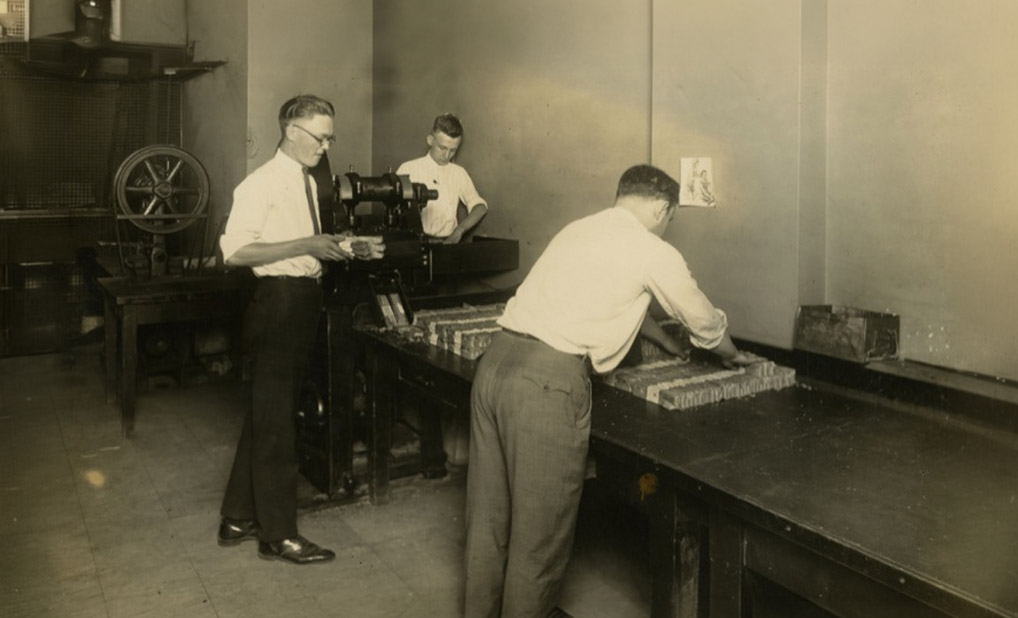

Have you ever wondered what cash processing operations looked like 100 years ago? Follow along on this photographic journey featuring archival images of Federal Reserve Bank cash offices in the 1920s.
The history of cash services at the Federal Reserve
One role of the Federal Reserve System is to ensure that depository institutions have sufficient supplies of currency and coin to meet public demand. The Federal Reserve Banks act as a distribution center for the issuance of new currency designed and printed by the Bureau of Engraving and Printing and for new coins minted by the U.S. Mint.
Today, there are cash offices at all 12 Federal Reserve Banks and select branches responsible for cash processing operations. One hundred years ago, these operations were primarily carried out by hand (Off-site).
Inspection and verification of cash
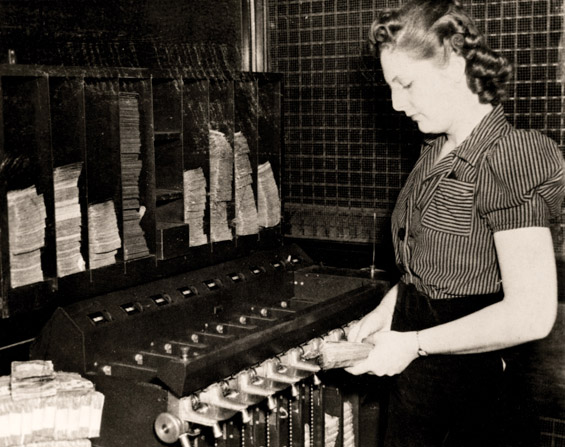
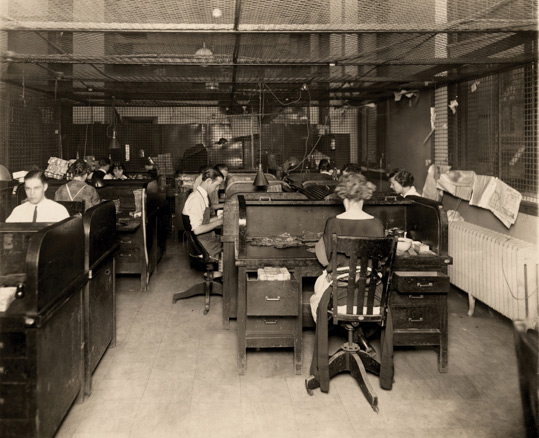
When a Federal Reserve Bank receives cash from a depository institution, it requires verification and inspection. In the 1920s, an employee would feed bills into a mechanized counting machine before they were inspected and sorted manually (Off-site).
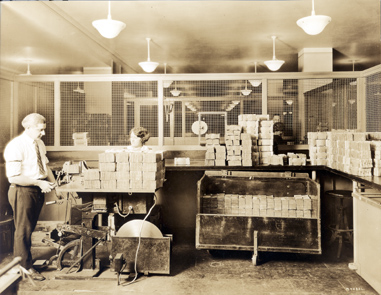
Afterward, fit cash would be bundled into packages (Off-site) — strapped with steel bands to prevent tampering — and moved to a vault or an armored carrier. Meanwhile, unfit currency was sent to be destroyed.
The cash vault
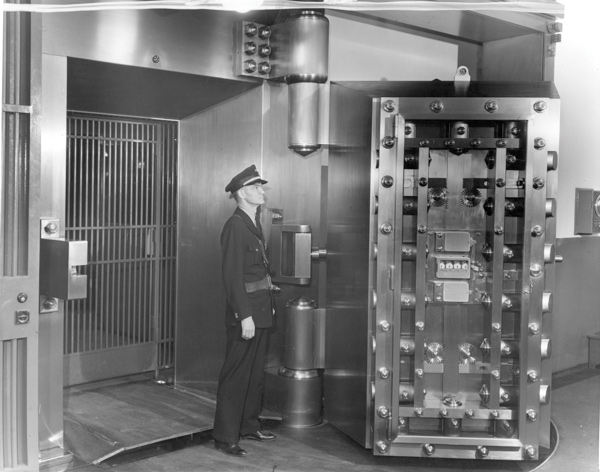
Each Federal Reserve Bank stores cash before and after inspection in heavily fortified vaults (Off-site). Many original vaults from this era are still in use, such as the Federal Reserve Bank of St. Louis’ cash vault pictured above. With a 44-ton and 33-inch-thick door, the vault was described in a 1925 bank publication as “burglar, mob, fire, and explosive proof as science and engineering skills can make them" (Off-site).
Unfit currency
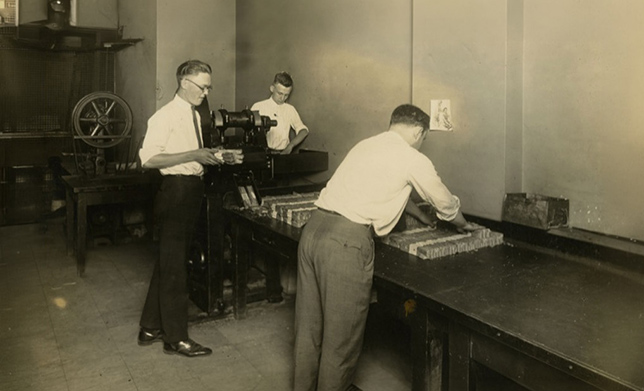
If a bill is worn, damaged or counterfeit, it is determined unfit and removed from circulation. In the 1920s, this process was referred to as “cancelling.” Employees of the currency cancelling and cutting division would cut unfit bills in half lengthwise (Off-site) before packaging them to be shipped to Washington, D.C. for destruction.
The armored carrier
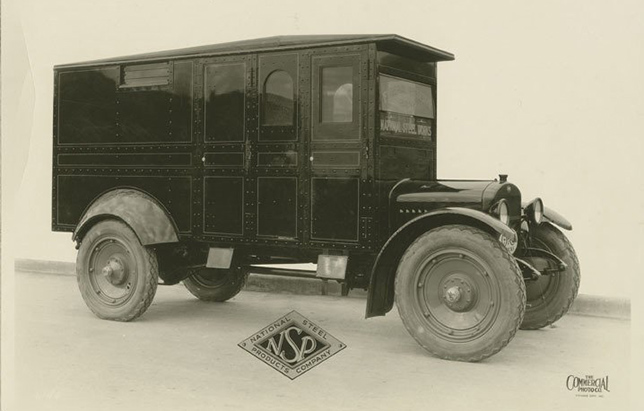
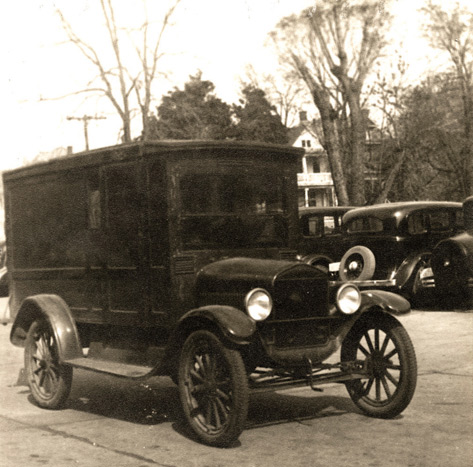
When cash is ready to be transported to a financial institution, it is released to an armored carrier to make the delivery. At some Federal Reserve Banks in the 1920s, the bills would have been shuttled by an armored Ford Model T (Off-site) or an armored truck built by National Steel Products (Off-site) with a speed of 30 miles per hour and a one-ton capacity.
FedCash® Services today
FedCash Services continues to ensure that depository institutions have sufficient supplies of currency and coin to meet public demand. Learn more about the current state of FedCash Services, including Cash Visibility, a program designed to bring greater transparency and efficiency to the cash supply chain.